1-Minute Summary & Hook
Hokkaido in winter is beautiful, but it is also one of the most operational trips in Japan. Snow roads, airport logic, darkness arriving early, and the way cold drains your body all matter just as much as the landscape.
This route is built around Asahikawa in, Sapporo or New Chitose out, Biei at the right hour, Otaru at the right light, and avoiding amateur winter-road mistakes.
#bestForcouples, winter-scene travelers, first serious Hokkaido winter visitors#difficultymedium#bestSeasonDecember-February#keyTransportrental car + selected rail#oneLineTakeHokkaido winter rewards the traveler who respects time, temperature, and roads.
Why Hokkaido in Winter?
1) It gives Japan's biggest winter scale
Biei fields, Blue Pond light, Otaru canal glow, and volcanic steam around onsen towns all land at a different scale in Hokkaido.
2) The city-and-snow mix is unusually strong
Sapporo alone is urban. Biei alone is scenic. Combining them properly is what makes the winter trip feel complete.
⚠️ Reality Check Before You Go
1) A winter rental car is a condition, not a casual add-on
For Biei and the Blue Pond zone, public transport alone rarely gives a smooth winter rhythm. If you rent, you must think about winter tires, scraping ice, and extra departure time.
2) After around 4 p.m., winter Hokkaido behaves like night travel
Save intentional night scenes, like Blue Pond illumination or Otaru canal, but finish normal road movement before dark whenever possible.
3) Noboribetsu is wonderful, but forcing it into a short route can weaken everything
It is better as a 3-night or 4-day expansion than as a rushed insert.
Low-Fatigue Timeline
2-Night, 3-Day Core Route
| Time | Plan | Practical note |
|---|---|---|
| Day 1 10:00 | Arrive at Asahikawa Airport | Pick up the rental car immediately |
| Day 1 11:00 | Asahikawa ramen lunch | Warm the body first |
| Day 1 13:00 | Head toward Biei | Use daylight well |
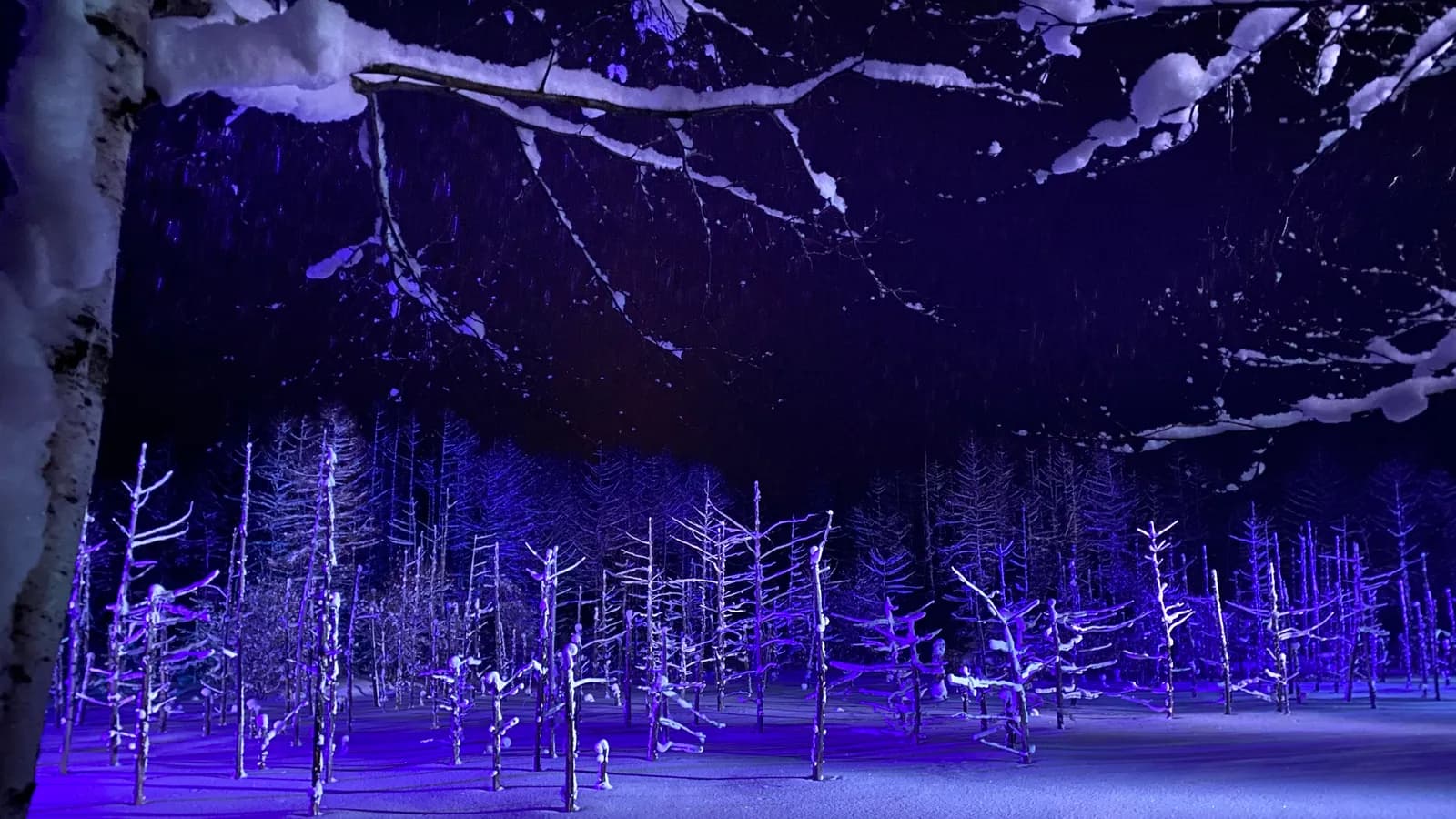
| Day 1 15:30 | Blue Pond | Time it around illumination |
| Day 1 18:00 | Check in around Biei/Furano | End the driving day cleanly |
| Day 2 09:00 | Leave Biei | Morning snow drive |
| Day 2 12:00 | Arrive in Otaru | Lunch, canal, cafe flow |
| Day 2 16:30 | Otaru Canal | Night-view timing |
| Day 3 10:00 | Move to Sapporo | Return the car before city rhythm |
| Day 3 12:00 | Sapporo city block | Beer museum / market / Odori |
| Day 3 16:00 | Head to the airport | Rail is safer for the finish |
Key Stops, Practical Tips Included
1) Blue Pond — In winter, the lighting matters as much as the place itself
The pond has presence in daylight, but winter Blue Pond becomes more complete once the light shifts and artificial illumination takes over.
2) Otaru Canal — This is really a timing problem, not a place problem
Otaru works once the gas lamps are alive and the reflections start carrying the scene.
3) Asahikawa ramen — Your first meal sets your winter body up properly
In Hokkaido winter, warmth is not just comfort. It is trip management.
4) Sapporo — Best used as the last-day urban reset
After Biei and Otaru, Sapporo works best as a cleaner city landing rather than the emotional centerpiece.
Plan B, Real Budget, and the Teaser
Plan B
- If snow-road confidence drops cut Biei and lean into Sapporo + Otaru
- If Blue Pond access weakens stay flexible in the Asahikawa/Biei area
- If the body crashes lengthen Otaru and compress Sapporo
Budget in One Sentence
A realistic 2-night, 3-day Hokkaido winter trip usually lands around 60,000 to 100,000 yen per person excluding flights.
Teaser for the Next Escape
If Hokkaido is winter at full scale, the next elegant follow-up is a more compressed, literary version of winter. Niigata Snow Country makes sense as the quieter sequel.