
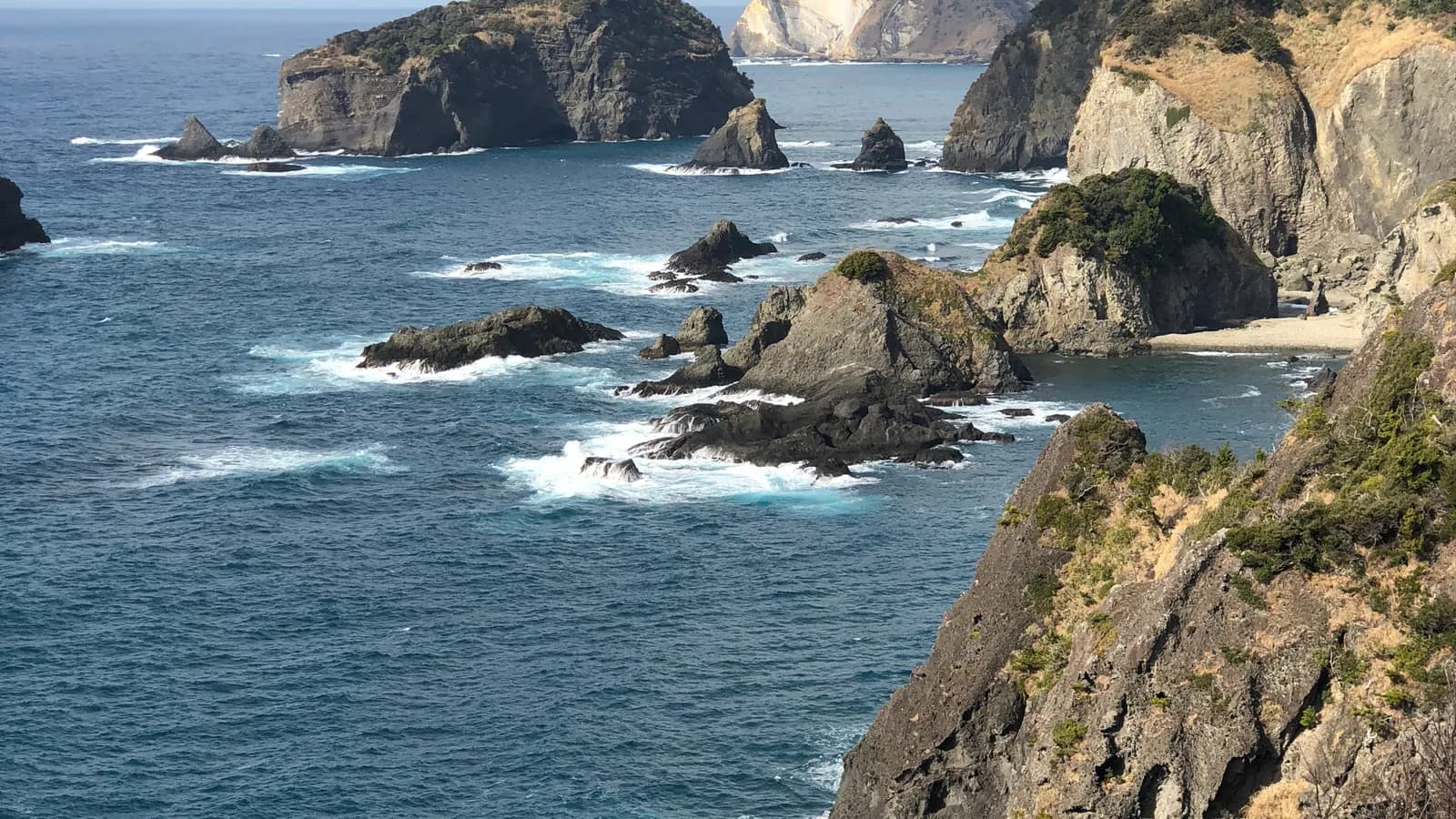
Two hours by car from Tokyo. The Izu Peninsula (伊豆半島), jutting out into the Pacific, boasts one of the most dramatic coastlines in all of Japan.
Rugged volcanic cliffs, emerald-blue seas, tiny fishing-port villages, and on a clear day, Mt. Fuji hovering on the horizon beyond the waves.
A rental car is ideal, but even without one, you can hit the key spots by combining buses and trains.
Day 1: East Coast — Cliffs and Sea
Mishima Skywalk
Japan's longest pedestrian suspension bridge (400 m), right at the entrance to the Izu Peninsula. On a clear day, you get a head-on view of Mt. Fuji from the middle of the bridge.
- Admission: 1,100 yen (~$8)
- 25 min by bus from Mishima Station
Honestly: The bridge itself is a 15-minute round trip. If Mt. Fuji isn't visible, it's a bit underwhelming. Only recommended on clear days.
Jōgasaki Coast (城ヶ崎海岸)
The highlight of Izu's east coast. These dramatic cliffs were formed about 4,000 years ago when volcanic lava met the sea.
Walking along the clifftop trail, you'll come to a 48-meter suspension bridge (Kadowaki Bridge). Look down from the bridge and you'll see the emerald sea crashing into white spray 20 meters below.
- 25-minute walk from Izu-Kōgen Station
- Trail: ~3 km, 1–2 hours
Stay: Itō Onsen
The main onsen town on Izu's east coast. Plenty of ryokans offer open-air baths with ocean views.
Recommended: Ocean-view open-air bath ryokan (15,000–25,000 yen / ~$105–175, 2 meals included)
Day 2: Southern Tip — Shimoda and Irozaki
Shimoda (下田)
This is the historic port where Commodore Perry demanded Japan open its doors to trade in 1854. The history is fascinating, but the real draw is the beaches.
Shirahama (白浜) Beach has white sand and crystal-clear water that rivals Okinawa. You'll find yourself thinking, "Is this really just 3 hours from Tokyo?"
- About 1 hour from Itō by Izukyū train
- Shirahama Beach: 10-min bus ride from Izukyū Shimoda Station
Lunch: Kinmedai (キンメダイ) — Golden-Eye Snapper
Izu's signature dish is kinmedai (golden-eye snapper) simmered in a rich soy sauce glaze. The flesh is impossibly tender with deep umami flavor.
Try a kinmedai set meal at a restaurant near Shimoda Harbor. 1,500–2,500 yen (~$10–17).
Irozaki (石廊崎) Lighthouse
The southernmost tip of the Izu Peninsula. A coastal trail leads to a small lighthouse perched on rugged rocks. So few people come here that it truly feels like "the edge of Japan."
Stay: Shimoda town or Rendaiji Onsen (8,000–15,000 yen / ~$56–105)
Day 3: West Coast — Sunsets and Hot Springs
Doi Onsen (土肥温泉)
An onsen town on Izu's west coast. Because it faces west, you can enjoy the magic combination of sunset + open-air bath.
On a clear evening, Mt. Fuji appears in silhouette behind the setting sun. Watching this from a rotenburo (open-air bath) is the kind of experience that stays with you for life.
Heading Home: Via Shuzenji
It's a 30-minute drive from Doi to Shuzenji. If you have time, take an hour to stroll through Shuzenji Onsen village, then catch the Izuhakone Railway to Mishima and the Shinkansen back to Tokyo.
Rental Car vs. Public Transport
| Option | Pros | Cons |
|---|---|---|
| Rental car | Freedom to explore the coast, access to hidden spots | Narrow, winding roads; parking challenges |
| Public transport | Doable via Izukyū train + bus combos | West coast access is inconvenient; time constraints |
Rental car recommendation: Rent from Mishima Station (1 day: 5,000–8,000 yen / ~$35–56)
Budget (Per Person, 2 Nights / 3 Days, Rental Car)
| Item | Cost |
|---|---|
| Tokyo ↔ Mishima Shinkansen round trip | 8,800 yen (~$62) |
| Rental car (2 days) + gas | 15,000 yen (~$105) |
| Accommodation: 2 nights (ryokan) | 30,000–50,000 yen (~$210–350) |
| Meals | 6,000–10,000 yen (~$42–70) |
| Admissions | 2,000 yen (~$14) |
| Total | 62,000–86,000 yen (~$435–600) |