When you step off the train at Kanazawa Station, a massive wooden torii gate greets you. This is the Tsuzumi-mon (鼓門), chosen as one of the "14 most beautiful train stations in the world."
The Hokuriku journey that begins here reveals a depth of Japan you'll never find in Tokyo or Osaka.
Why This Route
The refined gardens and gold-leaf culture of Kanazawa. The fairytale gassho-zukuri villages of Shirakawa-go (白川郷). Takayama's (高山) sake breweries and Hida beef. The warm embrace of Gero Onsen (下呂温泉).
Each one is a destination in its own right, yet with a rental car, you can experience them all in 5–6 days.
Days 1–2: Kanazawa — Refined Tradition
Kenrokuen (兼六園) — A Garden for All Seasons
One of Japan's three great gardens. Cherry blossoms in spring, lush greens in summer, fiery maples in autumn, and yukitsuri (snow-hanging ropes) in winter — each season creates Kanazawa's signature landscape.
Visit during the free early-morning hours starting at 7 AM to enjoy it without the crowds. The garden connects directly to Kanazawa Castle Park — explore both while you're there.
Higashi Chaya District — Echoes of Edo
The wooden buildings of an Edo-era geisha district remain perfectly preserved. Grab a gold-leaf soft serve ice cream and wander the narrow lanes — it feels like stepping 200 years into the past.
The gold-leaf application experience at Hakuichi is a fun activity. About 1 hour, 1,200 yen (~$8).
Omicho Market (近江町市場) — Kanazawa's Kitchen
Fresh seafood from the Sea of Japan awaits at this 300-year-old market. Sweet gamaebi (sweet shrimp), seasonal crab, and Kanazawa's prized nodoguro (blackthroat seaperch).
Before 10 AM is when everything's freshest. The seafood bowl at Ikiiki-tei (いきいき亭) on the second floor offers the best value.
Day 3: Shirakawa-go — Into a Fairytale
A 1-hour-15-minute bus ride from Kanazawa. A UNESCO World Heritage Site unfolds before your eyes.
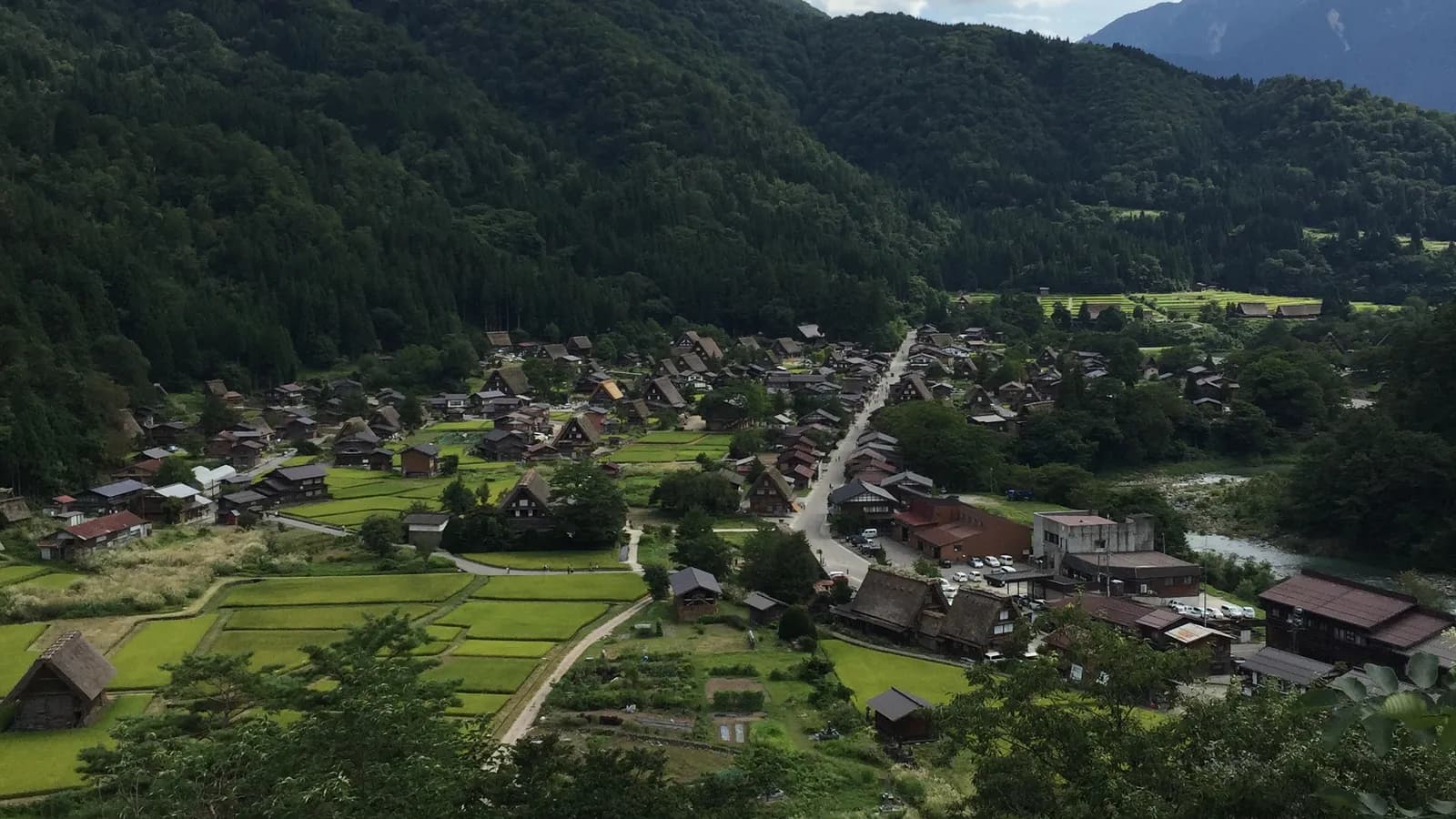
A mountain village of 114 thatched-roof houses built in the gassho (がっしょう, "praying hands") style. In winter, the snow-covered village illuminated at night is a fairytale landscape that leaves you speechless.
Head to the Shiroyama observation deck for a panoramic view of the entire village. Winter illumination events are limited to weekends in January–February. Advance reservation is required (booking opens in October). Wada House (和田家) lets you see the interior of a gassho-style farmhouse.
Day 4: Takayama — Sake in "Little Kyoto"
A one-hour drive from Shirakawa-go brings you to Takayama (高山), known as "Little Kyoto" (小京都).
Sanmachi Street
Edo-era wooden buildings line the streets, housing sake breweries, miso shops, and traditional craft stores. The cedar balls (sugidama, 杉玉) hanging outside breweries are the traditional sign announcing "new sake is ready!"
Stop for a free tasting at each brewery as you stroll — that's part of the charm of this street.
Don't miss Hida beef sushi (~800 yen per piece, ~$5). It literally melts in your mouth. Mitarashi dango (soy-sauce-glazed rice dumplings) are another Takayama specialty. The morning market (Miyagawa Asaichi, 宮川朝市) opens at 7 AM — local pickles and fruit are delicious.
Day 5: Gero Onsen — Falling in Love
One hour from Takayama on the JR Takayama Main Line. You've arrived at Gero Onsen (下呂温泉), one of Japan's three most celebrated hot springs.
The name "Gero" might sound funny in some languages, but the moment you sink into these waters, you'll forget all about it.
The kaiseki dinner and open-air bath at Yunoshimakan ryokan are the kind of experience that makes you whisper "I'm in love."
Yunoshimakan requires advance booking. Both the kaiseki dinner and breakfast are superb. Hunting for free foot baths along the Hida River is part of the fun. Frog statues (gero = the sound a frog makes) are scattered throughout the village — great photo spots.
Day 6: Tateyama or Return via Nagoya
If you have time, consider tackling the Tateyama Kurobe Alpine Route. Riding six different modes of transport through the 37-kilometer mountain route that cuts through the 3,000-meter Japan Alps is an experience of an entirely different scale.
The highlight is the 20-meter snow walls (Yuki-no-Otani) in spring (April–June).
From Gero to Nagoya by JR limited express: 1 hour 40 minutes. Fly home from Nagoya's Chubu Centrair Airport.
Trip Planning Checklist
| Item | Details |
|---|---|
| Getting there | Tokyo → Kanazawa, Hokuriku Shinkansen 2h30m / Nagoya → Takayama, JR 2h20m |
| Best time | Winter (Shirakawa-go illumination), Autumn (foliage), Spring (Tateyama snow walls) |
| Suggested stay | 5 nights 6 days (rental car recommended) |
| Budget | |
| Rental car | Highly recommended (makes Shirakawa-go ↔ Takayama travel much easier) |
| Accommodation | Kanazawa hotel 2 nights + Takayama ryokan 1 night + Gero Onsen ryokan 1 night |
| Packing | Warm clothing essential for winter visits. Watch for snowy roads when driving |